Street stall · London · Westminster & the Docks · United Kingdom · around 1900
The porters' breakfastThe coffee stall
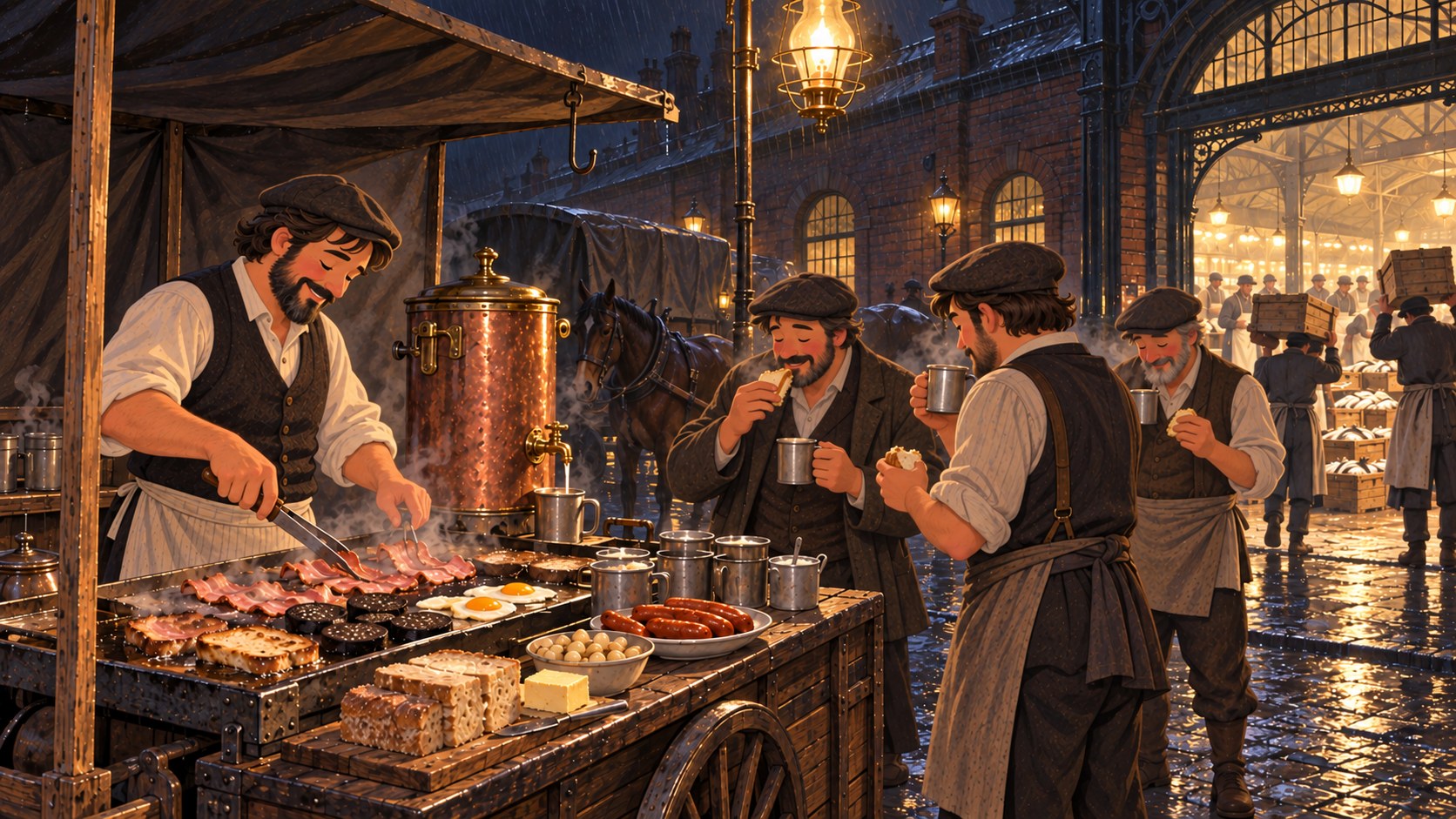
A stall under a naphtha flare at four in the morning, bacon on the griddle and a mug filling from the boiler tap.
What to look for
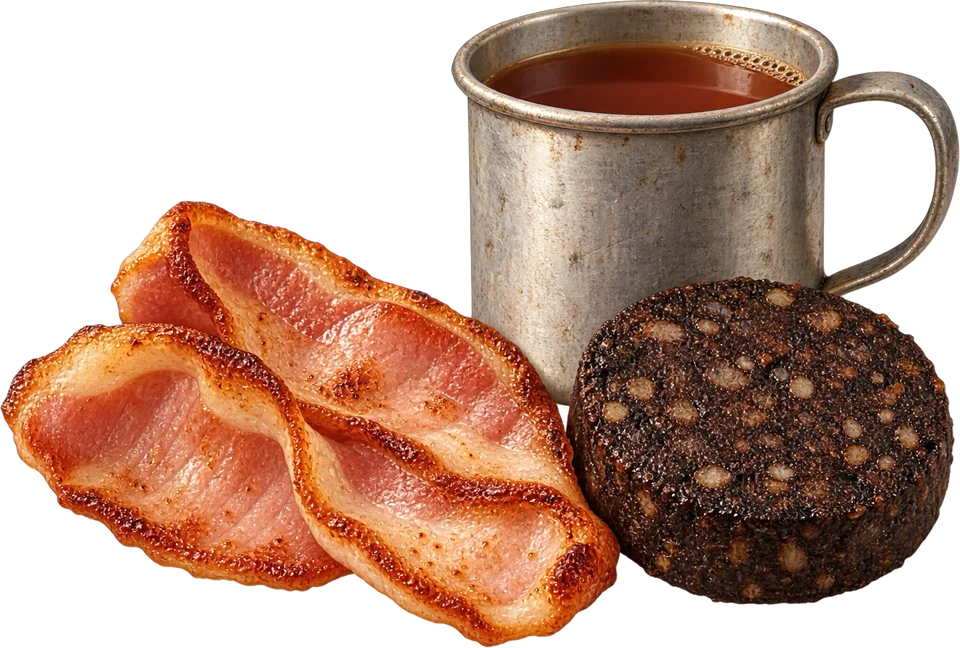
Turn the bacon
Henry Mayhew counted at least two hundred coffee stalls in London in London Labour and the London Poor in 1851, and noted that the coffee stall alone among the street trades sold something like a meal rather than a luxury. They fed the people who worked through the night.
Fill the mug
The boiler has a brass tap and the tea is dark, strong and sweet. The stall is lit by a naphtha flare, an open oil flame, which throws a hard, flickering light on faces.
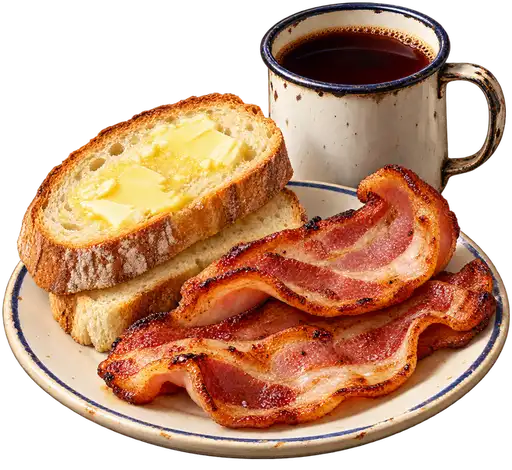
Take the bread and butter
In 1861 Isabella Beeton's Book of Household Management set out, for home cooks, the breakfast that later became the full English. At a stall it was bacon, bread and butter, an egg if you could pay for one, and tea, handed over a board and eaten standing up.
The story
Bacon, eggs, black pudding and strong tea before the market opened.
London coffee stalls fed people whose work began in the dark. On a flat griddle, bacon, black pudding (a blood sausage) and eggs sizzled, with bread fried in the bacon fat. Strong tea came from a brass boiler, with sugar and thick bread and butter close by. Porters and drivers ate standing beside the cart.
Coffee stalls were common by the mid-nineteenth century because they sold a filling meal at hours when most kitchens were closed. The foods of a full English breakfast were already familiar, though many homes ate something cheaper: bread, dripping (fat from a roast) and tea.
Today, look for a traditional cafe, often called a caff, near a market or high street. Regional breakfasts may add Scottish tattie scones, Welsh laverbread, or Ulster soda bread. The best clue is a busy grill early in the morning.
Today
The street coffee stalls have almost disappeared from London. The same breakfast is now served in cafes.
What this kitchen cooks
- Bacon, bread and teaOff the boardBack rashers curled on the griddle, thick bread and butter, and a tin mug of strong black tea.
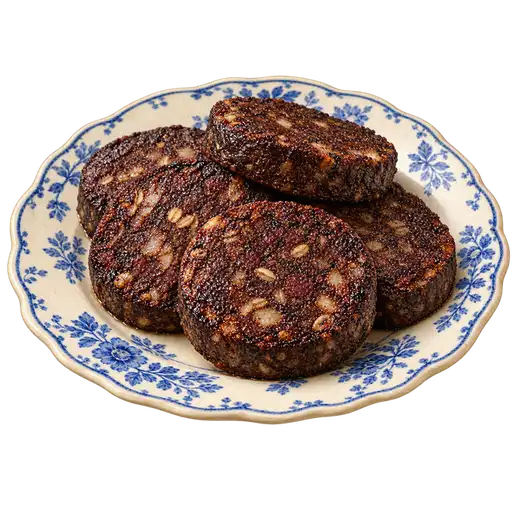 Black puddingBlood and oatsPig's blood, fat and oatmeal in a skin, cut into discs and fried until the outside crisps.
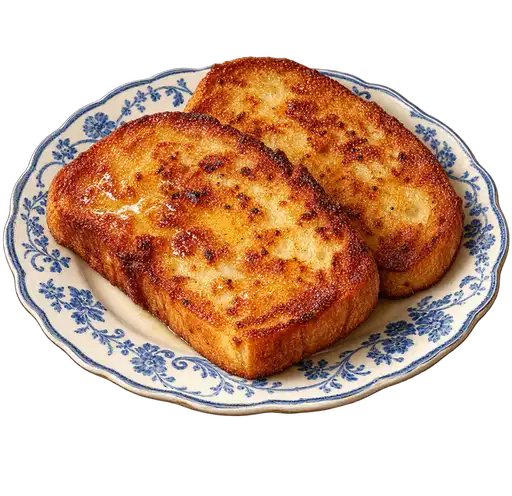 Fried breadIn the bacon fatBread laid in the fat the bacon left and turned once, so none of the fat in the pan was wasted.
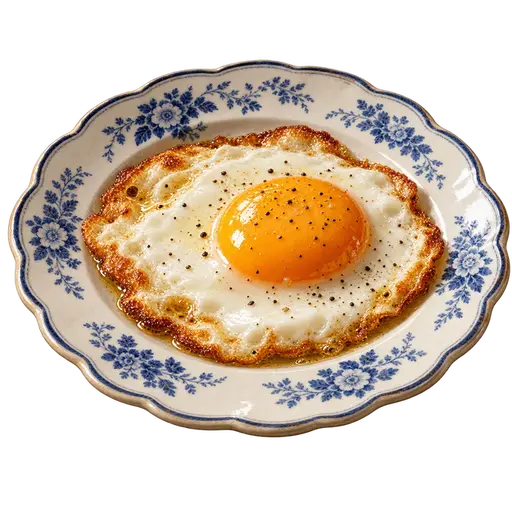 A fried eggIf you could payAn egg broken into the same fat, an extra for anyone who could pay.
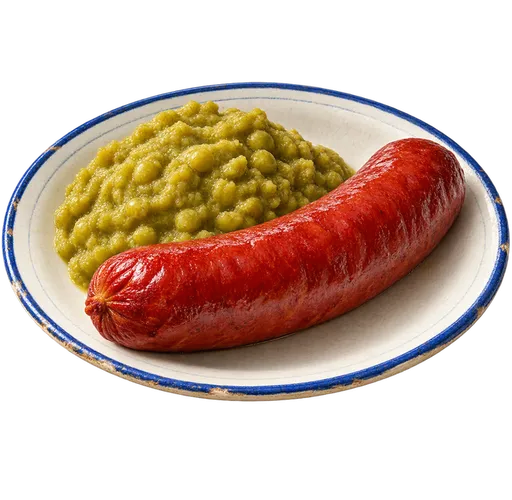 Saveloy and pease puddingSaveloyA smoked red sausage boiled and handed over with a spoon of split-pea pudding, eaten standing in the cold.
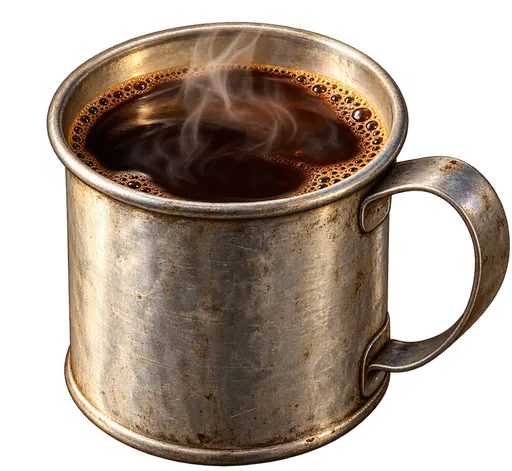 CoffeeThe stall's ownChicory as much as coffee, boiled in a tin urn, sweet and hot, and the reason the stall exists.