Ingredient · London · Westminster & the Docks · United Kingdom · around 1900
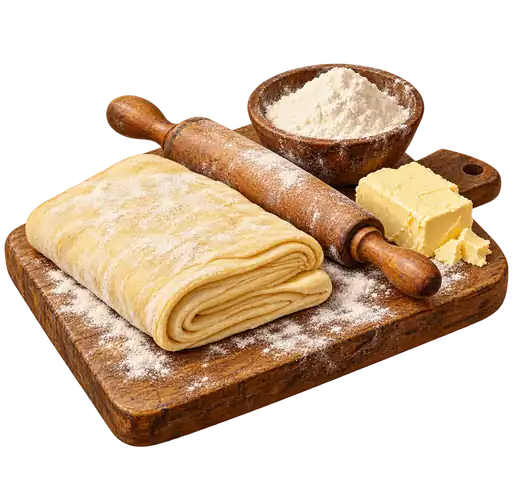
The pastry boardButter, flour and suet
Butter folded into dough for crisp pies, tarts and special dinners.
The story
British pastry changes with its fat and purpose. Hot-water crust makes a firm case for pork pies. Suet, a hard beef fat, gives steamed puddings a soft, rich crumb. Puff pastry traps thin layers of butter and air, then rises around pies and tarts in a hot oven.
These pastries suited different kitchens. A pork pie with its firm crust travelled well, a suet pudding cooked beside other pots, and puff pastry showed the skill of a well-equipped bakehouse. Today, bakery windows across Britain still show the same range. Try a savoury pie first, then compare its crust with a fruit tart or custard slice.
Today
Pork pies, suet puddings and puff pastry are still sold in British bakeries, and Melton Mowbray pork pies have had protected status since 2008.
What people make with it
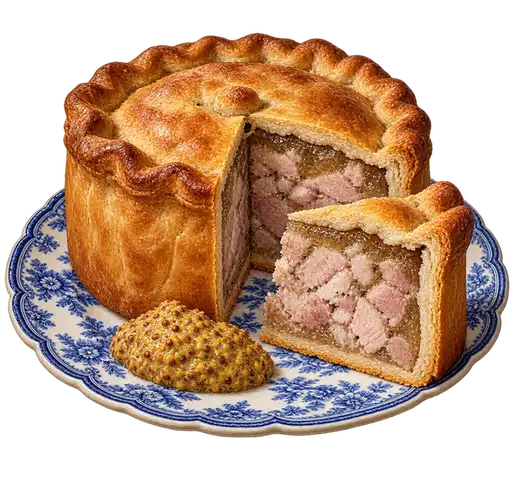 Pork pieChopped pork baked inside a firm hot-water crust, cooled and eaten in slices with mustard or pickle.
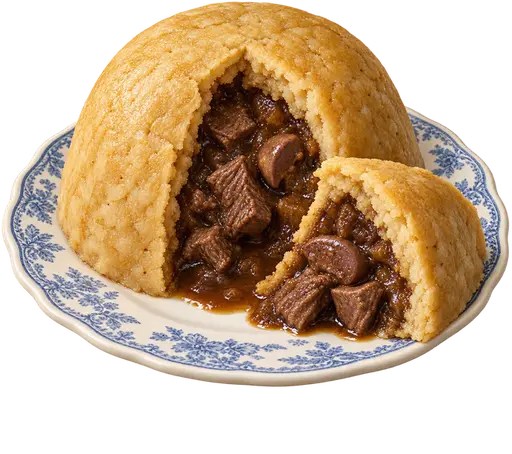 Steak and kidney puddingBeef and kidney sealed in a soft suet crust and steamed until the filling makes its own gravy.
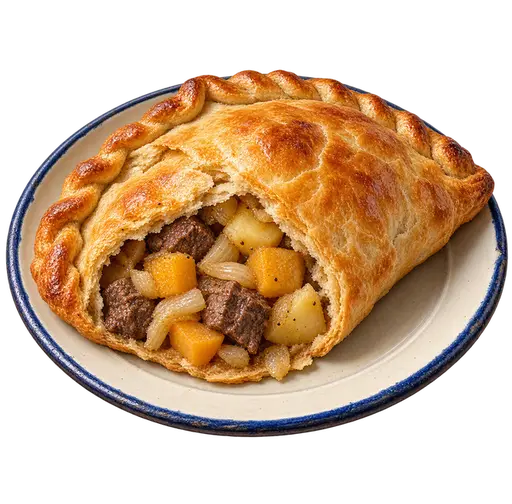 Cornish pastyBeef, potato, swede and onion folded into a sturdy pastry case for a meal that travels well.
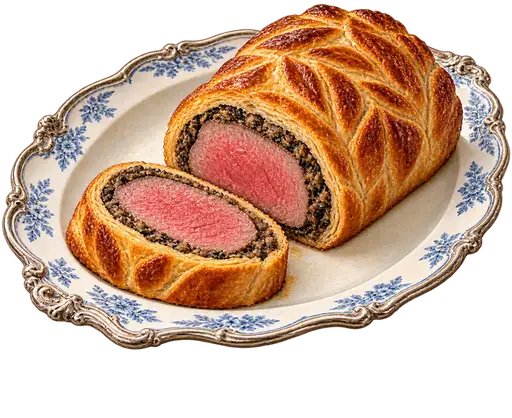 Beef WellingtonBeef fillet covered with finely chopped cooked mushrooms, wrapped in puff pastry and baked.
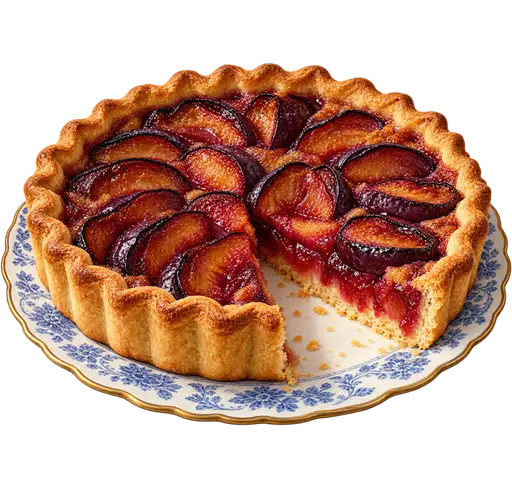 Fruit tartShort pastry filled with seasonal fruit such as apples, plums or rhubarb and baked until the juices thicken.