Restaurant · London · Westminster & the Docks · United Kingdom · around 1900
The public houseThe Sunday joint
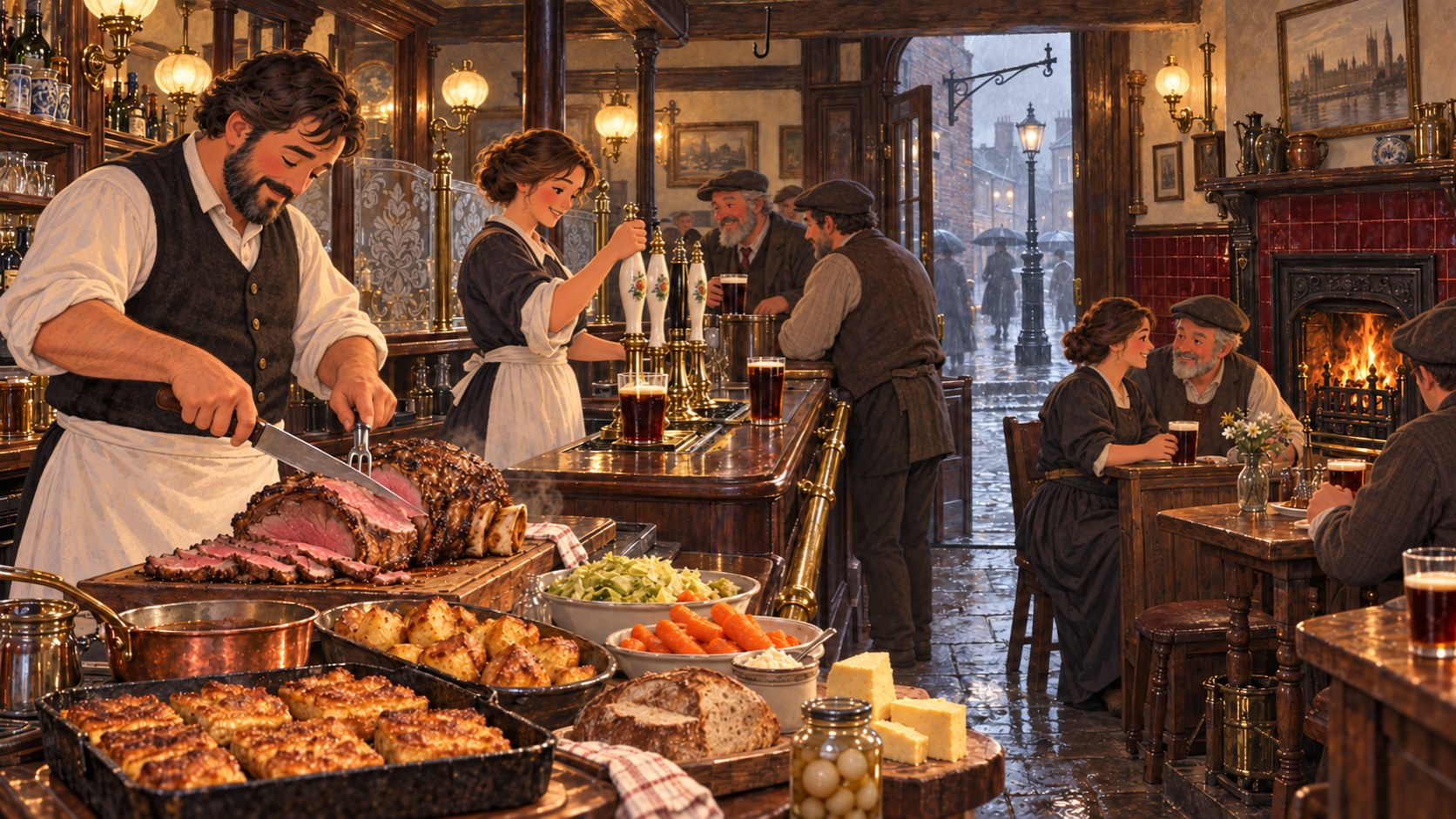
A wet London evening, a sirloin part-carved on the counter, and the one roast of the week going out in slices.
What to look for
Look at the cut face
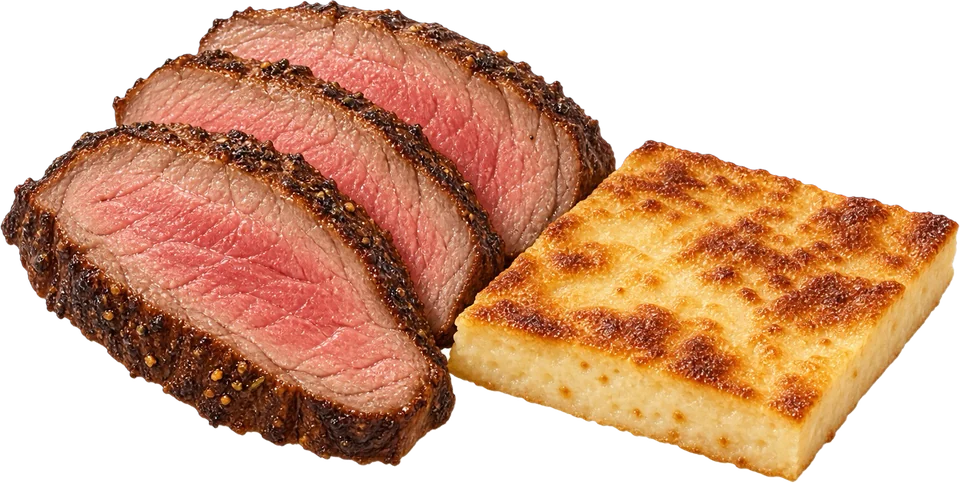
The roast is carved across the grain. The outside slice, brown and salty from the dripping, was the one people asked for. A sirloin is roasted on the bone: the bone carries heat into the meat and helps it keep its shape while it rests.
Lift the pudding tin
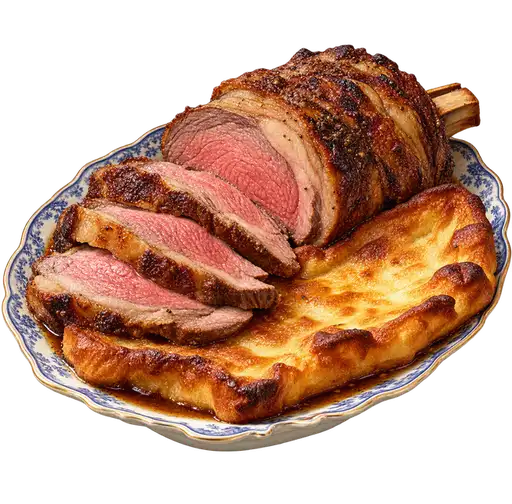
The Whole Duty of a Woman printed a recipe for a dripping pudding in 1737. Hannah Glasse called it Yorkshire pudding in The Art of Cookery Made Plain and Easy in 1747. The batter is baked flat under the roasting meat, cut into squares and eaten first, with gravy.
Pull the beer engine
The beer engine is the hand pump on the bar. The roast belongs to Sunday, the one day there was both a fire to cook on and money for the meat. The Beerhouse Act of 1830 let any householder who paid local rates sell beer on a cheap licence, and tens of thousands of beerhouses opened across England within a few years. The etched glass and polished mahogany here copy the gin palaces of the same decade.
The story
Sunday beef, pan gravy and the everyday food of a British pub.
A late Victorian public house might roast one large joint of meat on Sunday. Beef cooked on the bone, potatoes browned in the dripping, cabbage, carrots, horseradish and pan gravy made the full plate. A flat batter pudding could bake underneath, catching the fat and meat juices.
The rest of the week was simpler. Bread, cheese and pickled onions needed only a cellar and a knife. Pork pies, salt beef and steamed puddings made with suet (hard beef fat) needed no big oven, so even a small kitchen could serve them. The pub became a place where working people could drink, eat and meet in the same room.
British pubs still serve Sunday roasts across the country. Look for roast beef with Yorkshire pudding in England, lamb in Wales, or local meat and vegetables elsewhere. The pub menu changes by region, but the Sunday roast is on offer almost everywhere.
Today
Most pubs still do a Sunday roast from midday, usually with Yorkshire pudding.
Cooked here
roasting
What this kitchen cooks
- Roast beef and Yorkshire puddingThe Sunday jointA sirloin roasted on the bone, carved across the grain, with batter baked flat in the dripping beneath it.
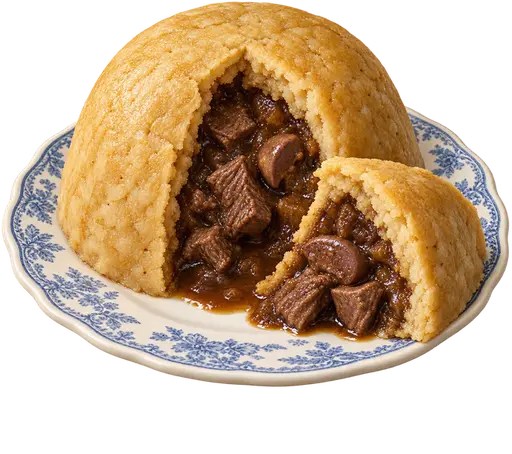 Steak and kidney puddingSuet crustBeef and kidney sealed inside a suet crust and steamed for hours until the gravy turns dark and sticky.
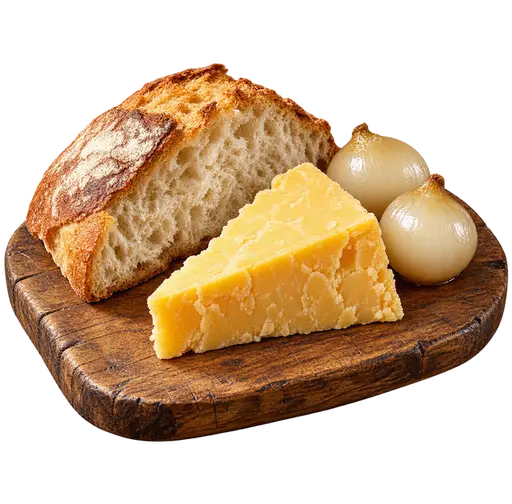 Bread, cheese and pickled onionsThe bar lunchThe cheapest thing on this counter: a wedge of Cheddar, a hunk of bread and a hard pickled onion.
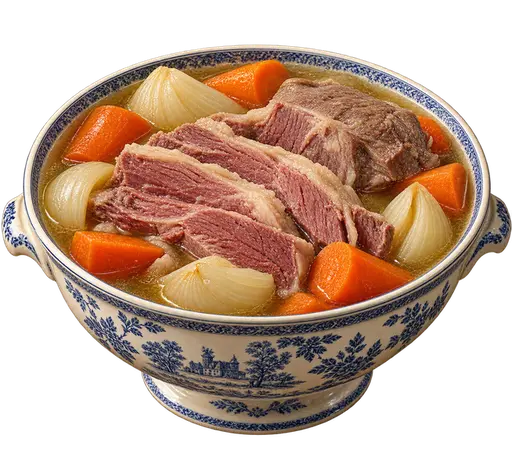 Boiled beef and carrotsSalt beefBrisket salted for a week, boiled slowly with carrots and onions, and eaten with the broth it made.
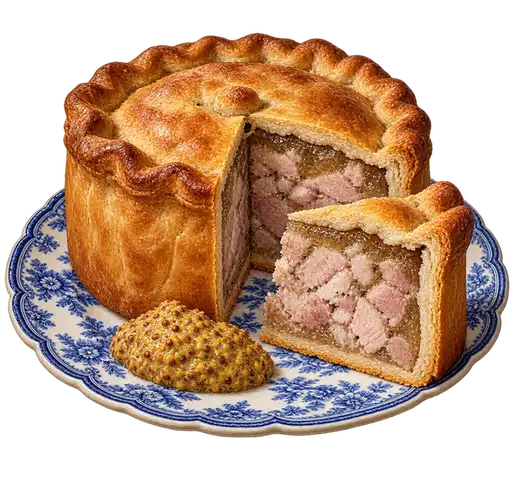 Pork pieRaised crustChopped pork in a firm pastry case made by hand, set with jelly from the bones, eaten cold with mustard.
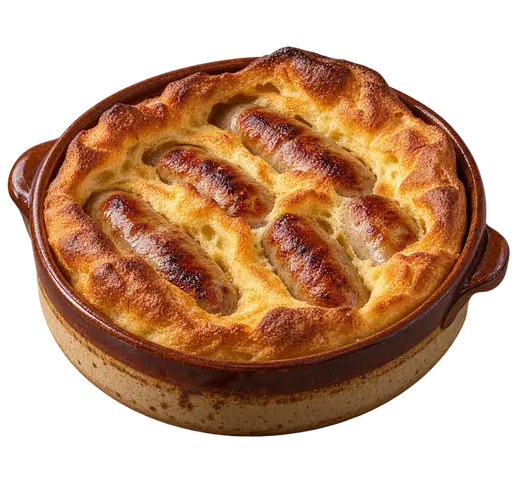 Toad in the holeBatter and sausageSausages baked into the same batter as the pudding, a way of making a little meat feed a table.
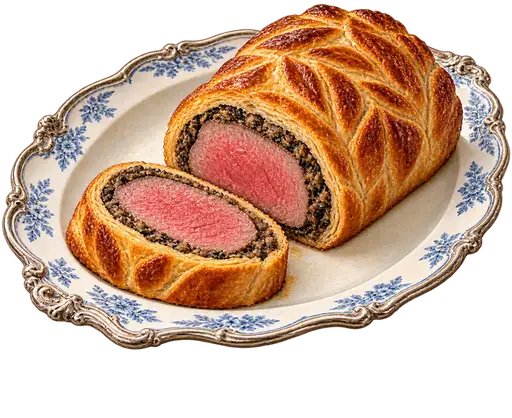 Beef WellingtonFillet in pastryFillet seared, spread with finely chopped cooked mushrooms and baked in pastry; no book names it before the twentieth century.
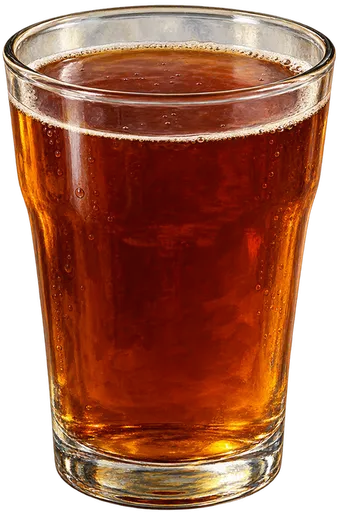 BitterDrawn by handKentish hops and pale malt, drawn up by hand pump into a straight glass, cellar-cool and flat.