Restaurant · London · Westminster & the Docks · United Kingdom · around 1900
The tea roomAfternoon tea
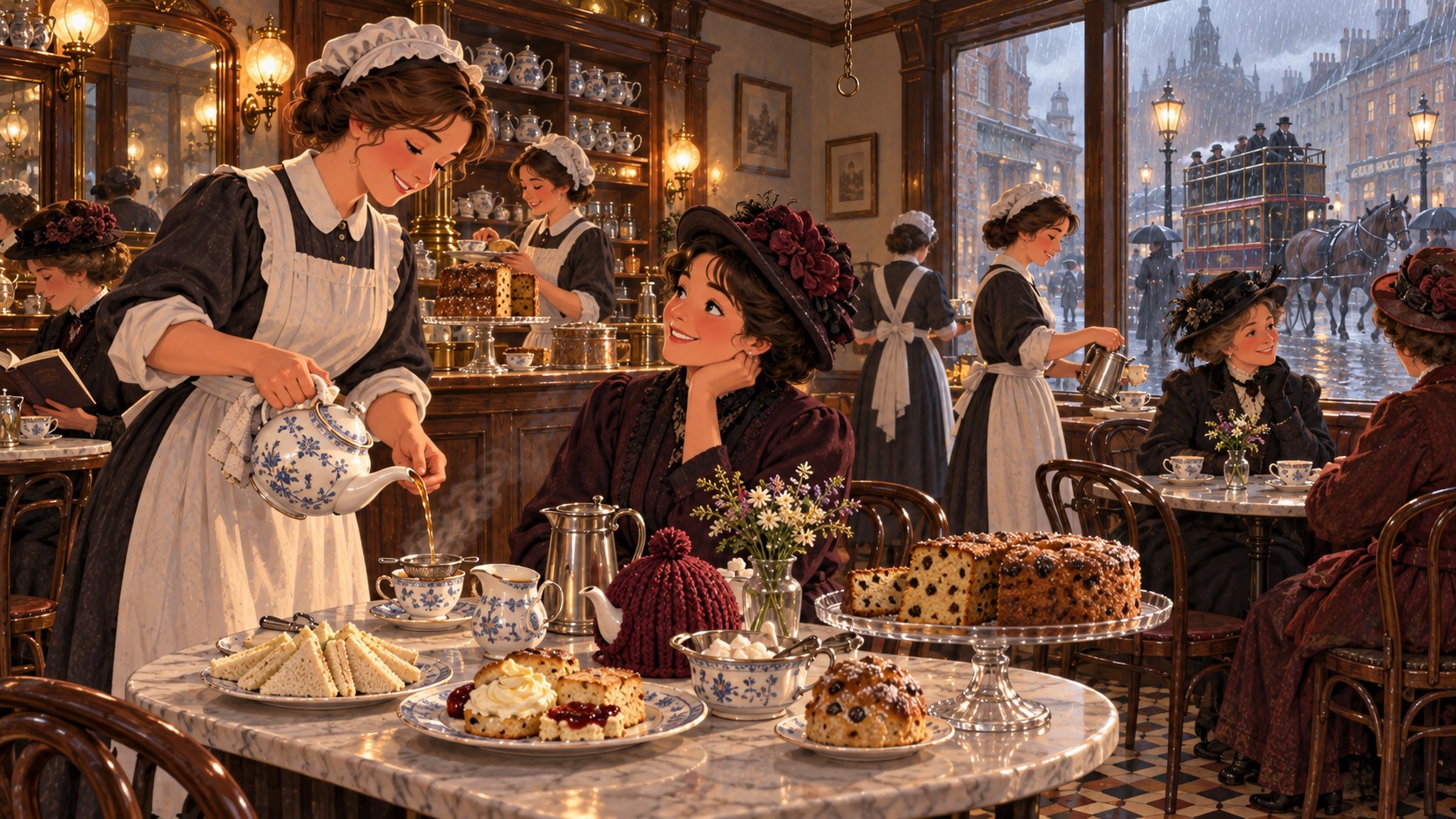
A pot tilted over a strainer, a cup on a marble table, and one of the few rooms in Britain a woman could sit in alone.
What to look for
Tilt the pot
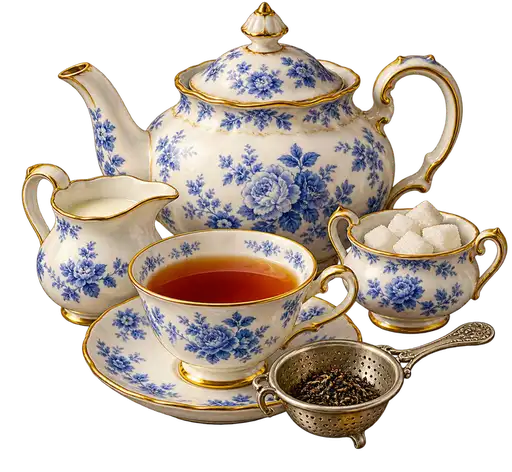
In 1864 the manageress of a London Bridge shop run by the Aerated Bread Company began serving customers tea. J. Lyons opened its first tea shop at 213 Piccadilly in September 1894. The tea leaves are loose, so the strainer is the only thing between the pot and the cup.
Take a slice of bread and butter
These rooms sold no alcohol and were staffed by women. That made them respectable for a woman on her own. In Britain, very few public places let her sit down and eat without hurting her reputation.
Cut the cake
Catherine Cranston opened the Willow Tea Rooms at 217 Sauchiehall Street, Glasgow, in October 1903. Charles Rennie Mackintosh designed the building, the interiors, the furniture, the light fittings and the cutlery; it is the only one of her tea rooms he designed from top to bottom.
The story
Loose-leaf tea, bread and butter, scones and a room open to women.
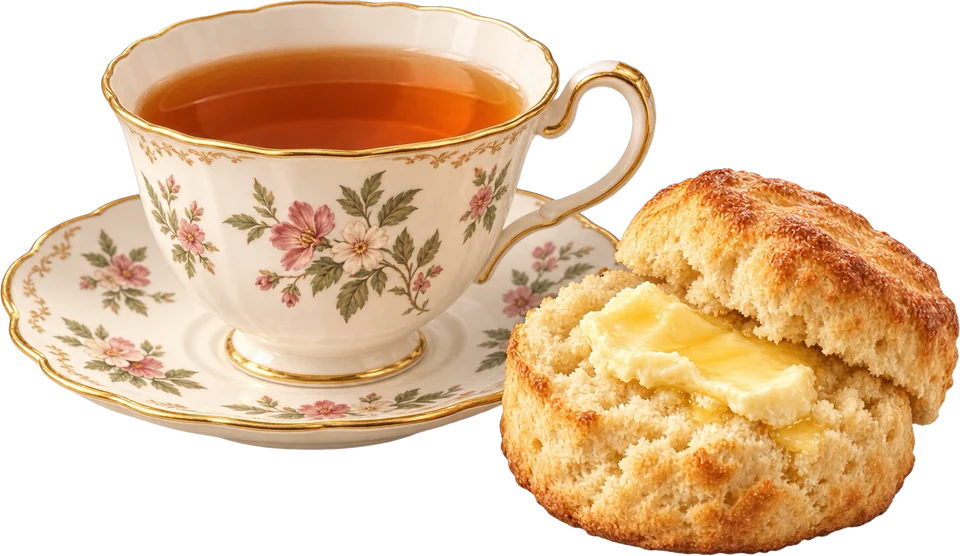
The tea room served a pot of loose-leaf Indian or Ceylon tea with milk and sugar. Thin bread and butter, plain scones with jam, seed cake and Bath buns made a light meal. A strainer sat beside the cup because the leaves went straight into the pot.
These alcohol-free rooms gave women a comfortable place to eat alone or with friends. The Aerated Bread Company began serving tea in a London shop in 1864, Catherine Cranston opened her first tea room in Glasgow in 1878, and Lyons opened its first tea shop in Piccadilly in 1894. Tea became part of town life as well as home life.
Independent tea rooms still carry this tradition. Order a pot and a scone in towns across Britain, then compare local baking, from Bath buns to Scottish shortbread and Welsh cakes.
Today
Lyons, the biggest tea-shop chain, closed its London Corner Houses in the 1970s. Afternoon tea is now usually a booked treat at a hotel or cafe.
What this kitchen cooks
- A pot of teaLoose leaf, warmed potIndian and Ceylon leaf brewed in a china pot, poured through a strainer, with milk and sugar to hand.
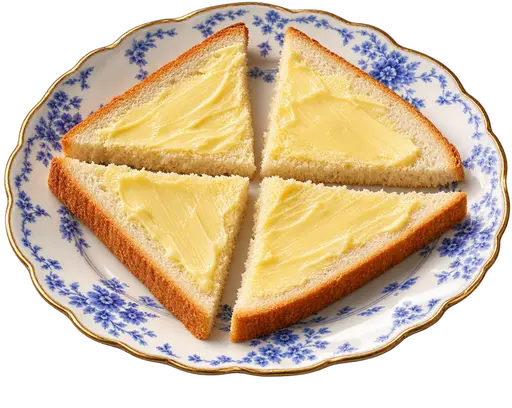 Bread and butterThin cutWhite bread cut thin, buttered and quartered, the plainest thing here and the test of the kitchen.
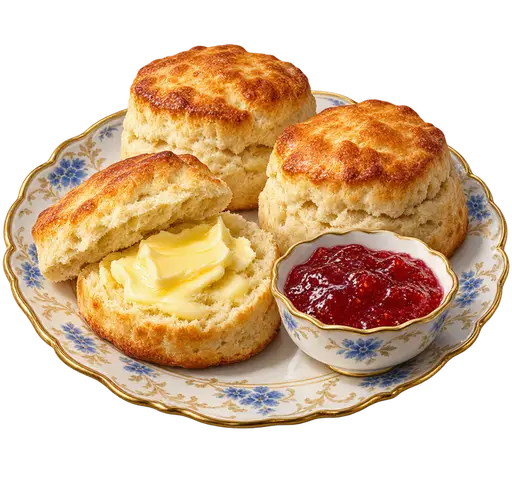 Scones with butter and jamPlain sconesWarm plain scones split and buttered, with jam beside them, baked in small batches through the afternoon.
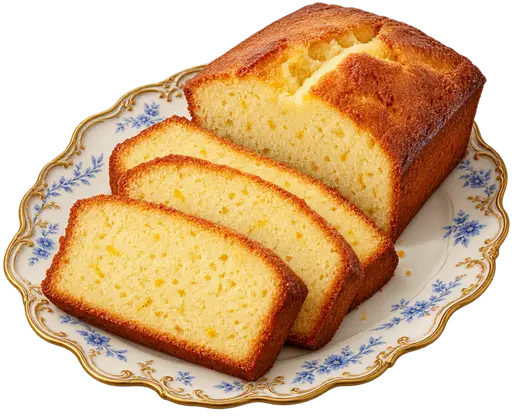 Madeira cakeSeed and MadeiraA close, buttery cake flavoured with lemon peel, cut in slices and sold by the plate.
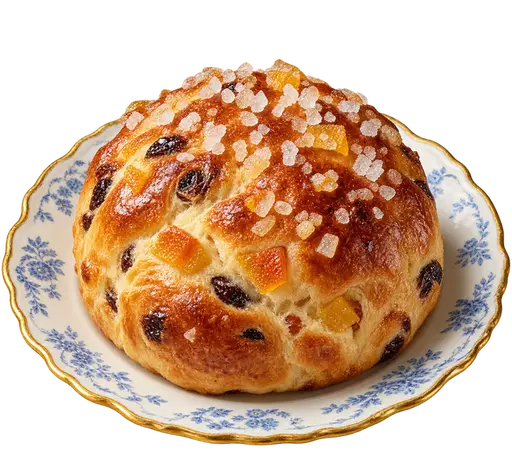 Bath bunSugared bunA rich yeasted bun with candied peel and crushed sugar on top, older than this room by a century.
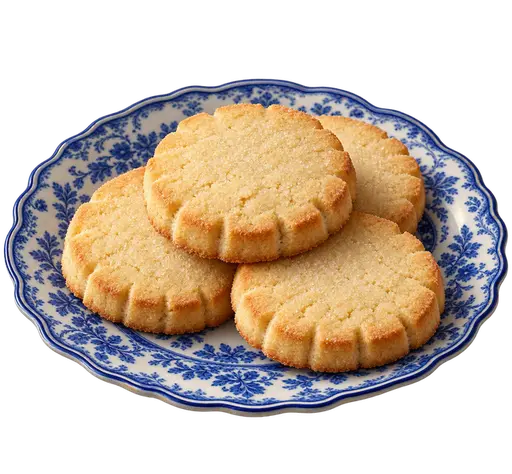 ShortbreadScots shortbreadButter, sugar and flour pressed into a round, notched at the edge and baked pale, served in the Glasgow tea rooms.
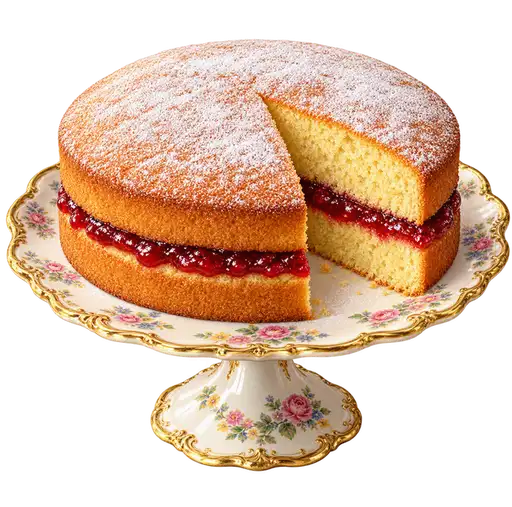 Victoria sandwichSponge and jamTwo rounds of sponge with jam between them, named for the Queen who took hers with afternoon tea.