Signature flavour · Andalusia · Andalucía · Spain · around 1900
The pepper drying housePimentón de la Vera
Smoke for ten days, then the stone mill.
The story
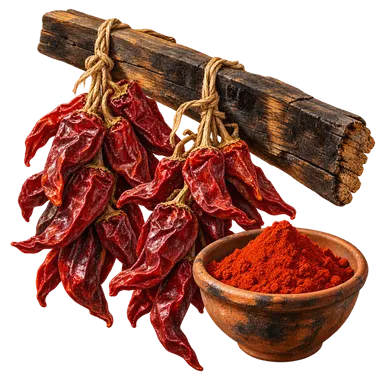
Peppers came from the Americas and were grown in the monastery gardens of Extremadura, and in the Vera valley they are still dried the slow way. The peppers are spread on a slatted floor above a low oak fire, and the smoke and heat come up through them for ten to fifteen days while they are turned by hand.
The smoke is the point. It dries the flesh without cooking it and leaves a taste that no oven can copy, and only after that are the peppers ground between stones into a fine, deep red powder. Pimentón de la Vera comes in three strengths, dulce, agridulce and picante, and the difference comes from the pepper varieties, since every batch is smoked the same way.
It goes into chorizo, over potatoes, into the sauce on a plate of bravas, and onto the octopus at the Galician fair, which it reached by mule along the old road north.
Today
The oak-smoke drying houses, called secaderos, are still used in La Vera, and the paprika has a protected designation of origin.
What people make with it
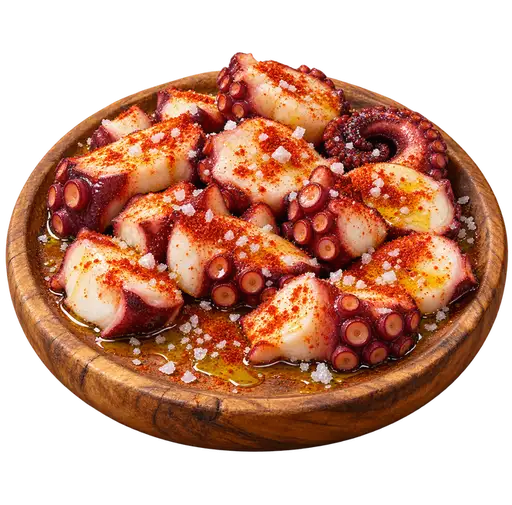 Fair-style octopusPolbo á feiraOctopus boiled in a copper pot, cut with scissors onto wood and dressed with oil, coarse salt and paprika.
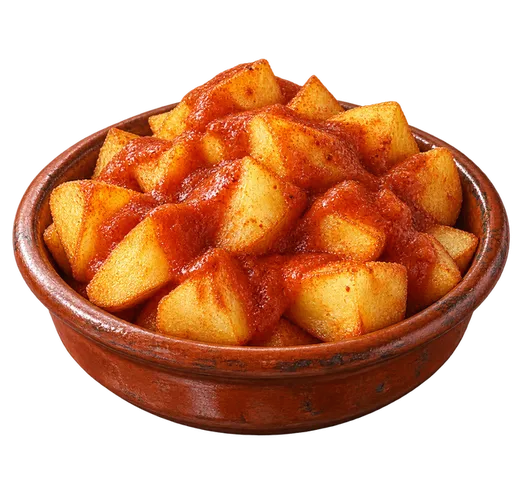 Patatas bravasPatatas bravasFried potato under a paprika and oil sauce, the plate that arrives first on this counter and is eaten standing.
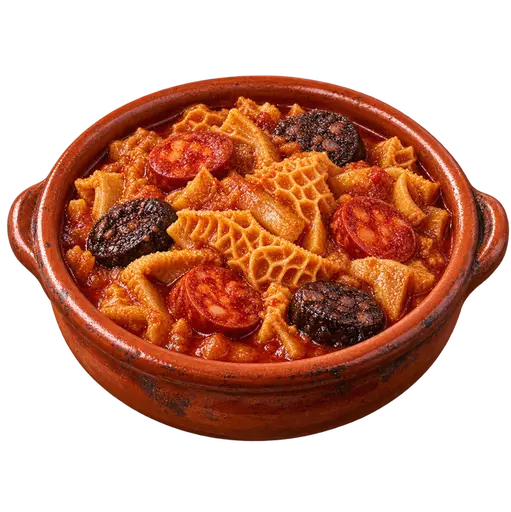 Tripe, Madrid styleCallos a la madrileñaTripe simmered with chorizo, morcilla and paprika until the sauce turns sticky, the winter dish of this city's taverns.